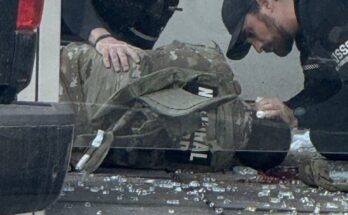
A US army helicopter crashed in northern Italytoday, killing at least four people on board.
Four bodies were pulled from the wreckage of the UH-60 Black Hawk army chopper, which went down near the city of Treviso, and another six people on board were injured and sent to area hospitals, Italian officials confirmed.
A spokesman at the US air force base in Aviano, near Venice, Senior Airman Justin Weaver, said he had no confirmation on the number of deaths but that the chopper involved had taken off from Aviano.
Airman Weaver said the Black Hawk crashed in the countryside outside of Treviso, in the uninhabited area of St Lucia di Piave. The location is about 25 miles south-west of Aviano, which in turn is about 70 miles north-east of Venice.

Television footage showed the charred remains of the chopper, which broke into at least two large pieces, smouldering in a swampy field.
The UH-60 Black Hawk is the US army’s general utility helicopter – used for transporting troops and equipment, air assault, medical evacuations and to support special operations as well as other missions.

At this dangerous moment for dissent
I hope you appreciated this article. Before you close this tab, I wanted to ask if you could support the Guardian at this crucial time for journalism in the US.
When the military is deployed to quell overwhelmingly peaceful protest, when elected officials of the opposing party are arrested or handcuffed, when student activists are jailed and deported, and when a wide range of civic institutions – non-profits, law firms, universities, news outlets, the arts, the civil service, scientists – are targeted and penalized by the federal government, it’s hard to avoid the conclusion that our core freedoms are disappearing before our eyes – and democracy itself is slipping away.
In any country on the cusp of authoritarianism, the role of the press as an engine of scrutiny, truth and accountability becomes increasingly critical. At the Guardian, we see it as our job not only to report on the suppression of dissenting voices, but to make sure those voices are heard.

Not every news organization sees its mission this way – indeed, some have been pressured by their corporate and billionaire owners to avoid antagonizing this government. I am thankful the Guardian is different.
Our only financial obligation is to fund independent journalism in perpetuity: we have no ultrarich owner, no shareholders, no corporate bosses with the power to overrule or influence our editorial decisions. Reader support is what guarantees our survival and safeguards our independence – and every cent we receive is reinvested in our work.

The Guardian’s global perspective helps contextualize and illuminate what we are experiencing in this country. That doesn’t mean we have a single viewpoint, but we do have a shared set of values. Humanity, curiosity and honesty guide us, and our work is rooted in solidarity with ordinary people and hope for our shared future.