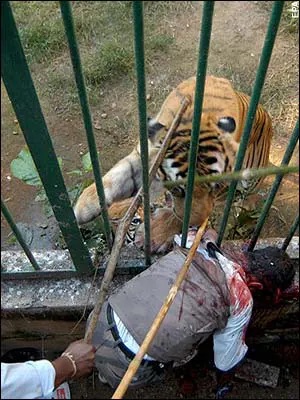
It was meant to be an ordinary afternoon at the city’s most popular wildlife attraction, a place known for its lush habitats, interactive learning centers, and carefully maintained animal enclosures. Families roamed the walkways; children pointed at giraffes nibbling on tree branches; couples took pictures in front of the aviary. But around 3:20 p.m., the calm atmosphere at Silver Ridge Zoo was shattered by a tragic incident that would leave visitors screaming, staff rushing into action, and authorities launching a full investigation.
According to officials, a 42-year-old man identified as Thomas Meyers had been visiting the zoo alone. Witnesses recalled seeing him near the tiger enclosure, standing by the guard railing that separated visitors from the first safety barrier. The tiger habitat at Silver Ridge Zoo spans nearly an acre—featuring dense vegetation, climbing platforms, and a large water pool. Tigers typically roam near the back of the exhibit, appearing only occasionally at the glass viewing area. But on this particular afternoon, two of the zoo’s Bengal tigers, Rajah and Nisha, were exploring the right-hand side of the enclosure, bringing them closer to the public than usual.
Visitors reported that Meyers seemed unusually fascinated by the animals. Instead of staying behind the marked visitor line, he leaned against the railing, attempting to get a better angle for photos. Some said he was reaching his hand out, repeatedly trying to provoke a reaction from the tigers, while others claimed he was attempting to capture some dramatic footage for social media. Despite the posted warnings—large signs in both English and Spanish clearly stating Do Not Cross Barriers—he moved closer and closer until zoo staff issued verbal instructions through a nearby loudspeaker, telling him to step back.
Before personnel could reach him physically, witnesses say Meyers lifted his phone above his head, slipped one leg over the railing, and leaned forward. One foot lost its balance on the uneven ledge, and he toppled forward into the restricted zone. Shocked onlookers gasped as he fell several feet into the moat-like buffer that separates visitors from the primary inner fence. That first barrier is designed to prevent accidental contact with animals. However, Meyers’ fall caused him to roll forward, and in panic he scrambled up the incline—right toward the second barrier, a lower section of the enclosure wall.
Unfortunately, the commotion attracted the attention of Rajah and Nisha, who instantly shifted into defensive mode. Big cats, especially tigers, rely on instinct, and sudden movement inside their territory can trigger a predatory or territorial response. As zoo security rushed to the scene, Meyer climbed the second wall in an attempt to escape, but in doing so, he fell directly into the tiger habitat.
Pandemonium erupted. Screams filled the zoo, parents shielded their children’s eyes, and a crowd quickly gathered at a distance as staff tried to intervene. Within seconds, the tigers closed in on the intruder. Standard operating procedures forbade any staff from directly entering the enclosure during an ongoing attack due to the extreme danger. Instead, emergency protocols called for the deployment of distraction tools—loud air horns, automated gates, and food lures meant to draw the tigers away. But these measures proved insufficient.
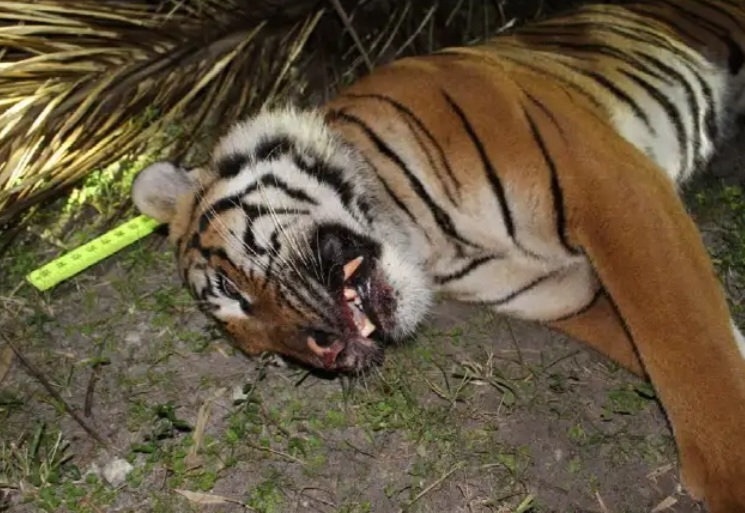
Zoo keepers used long-range noisemakers and attempted to lure the tigers into their feeding pen, but instinct had already taken over. Rajah, the larger of the two, was the first to make contact. Nisha followed. The attack unfolded quickly, and by the time the emergency response team managed to isolate the animals using hydraulic gate systems, Meyers had sustained fatal injuries.
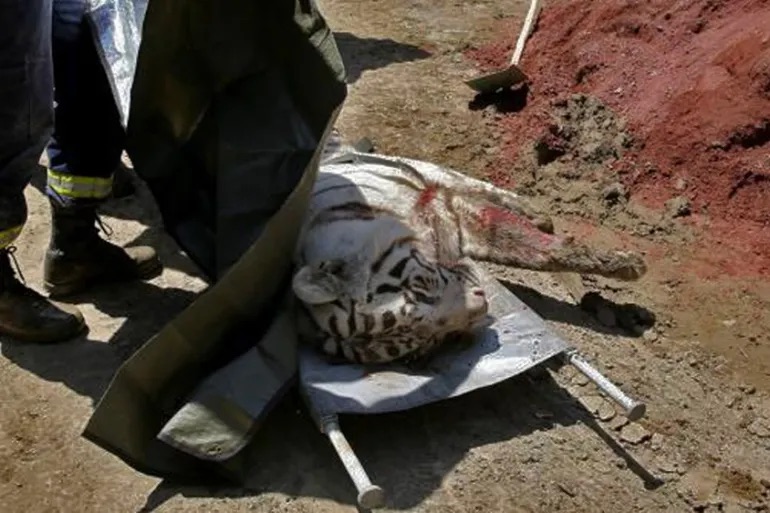
Paramedics arrived shortly after, but they pronounced him dead at the scene.
Police officers cordoned off the entire tiger exhibit and escorted traumatized visitors to counseling stations set up near the zoo entrance. The facility went into immediate lockdown, and the tigers were secured in their indoor holding rooms while investigators reviewed surveillance footage and interviewed witnesses.
In a press briefing later that evening, Zoo Director Karen Holt expressed deep condolences to the victim’s family but emphasized that the tragedy stemmed from a clear violation of safety rules. “Our barriers are designed to protect both guests and animals,” she stated. “This incident occurred because the visitor deliberately crossed multiple restricted zones. The tigers were simply responding as wild animals do.”
Animal welfare groups also weighed in, voicing relief that the tigers would not be euthanized. Many highlighted that the responsibility lay not with the animals but with the human actions that led to the encounter. Rajah and Nisha remain under observation, but zoo officials confirmed they would not be removed from the facility.
As the investigation continues, authorities are reviewing whether additional safety measures—such as taller railings, more security personnel, or extended buffer zones—should be implemented. Early assessments suggested that the existing barriers exceeded standard requirements and that the zoo followed all legal safety protocols. Still, the emotional impact of the tragedy has led many to question how facilities can prevent similar incidents in the future.
Experts say the challenge lies not in the design of zoo enclosures but in human behavior. Wildlife biologist Dr. Samuel Crane noted that wild animals, even those born in captivity, retain their natural instincts. “A tiger is never a pet. It doesn’t matter how calm or accustomed it appears. Getting too close is a risk no one should ever take.”
Visitors who witnessed the attack recounted the horror, with many expressing disbelief at Meyer’s actions. “He kept leaning closer and closer. People told him to stop,” said a woman who had stood only a few feet away. “He just didn’t listen. And then it all happened so fast.”
The zoo reopened the next day, though the tiger exhibit remained temporarily closed. Staff placed additional warning signs at all major enclosures and increased patrols in high-traffic zones. Flowers and handwritten notes were placed outside the exhibit wall, some mourning the loss of life and others urging future visitors to respect wildlife boundaries.
The tragedy at Silver Ridge Zoo serves as a sobering reminder of the fine line that exists between humans and wild animals. While modern zoos strive to create immersive environments where people can observe and appreciate species they may never encounter in the wild, these educational experiences require strict caution. Barriers exist for a reason—not only to protect visitors but also to maintain the safety of the animals who live within.
In the end, the incident is a heartbreaking combination of human error, instinctual animal behavior, and a split-second lapse in judgment. Silver Ridge Zoo will undoubtedly carry the memory of that day for years to come, using it as a catalyst for improved safety awareness. And for visitors everywhere, the lesson is simple and everlasting: wild animals must be respected, and boundaries must never be crossed.